
Cavitations: The Hidden Infections That Can Hold Your Healing Hostage
Cavitations: The Hidden Infections That Can Hold Your Healing Hostage
There are moments in a healing journey when you feel a layer lifting—when you know, deep in your body, that you are addressing something foundational. Today was one of those moments for me.
Let’s talk about cavitations—what they are, why they matter, and why addressing them can be a critical step for those with chronic illness, Lyme disease, mold illness, and persistent inflammation.
What Are Cavitations?
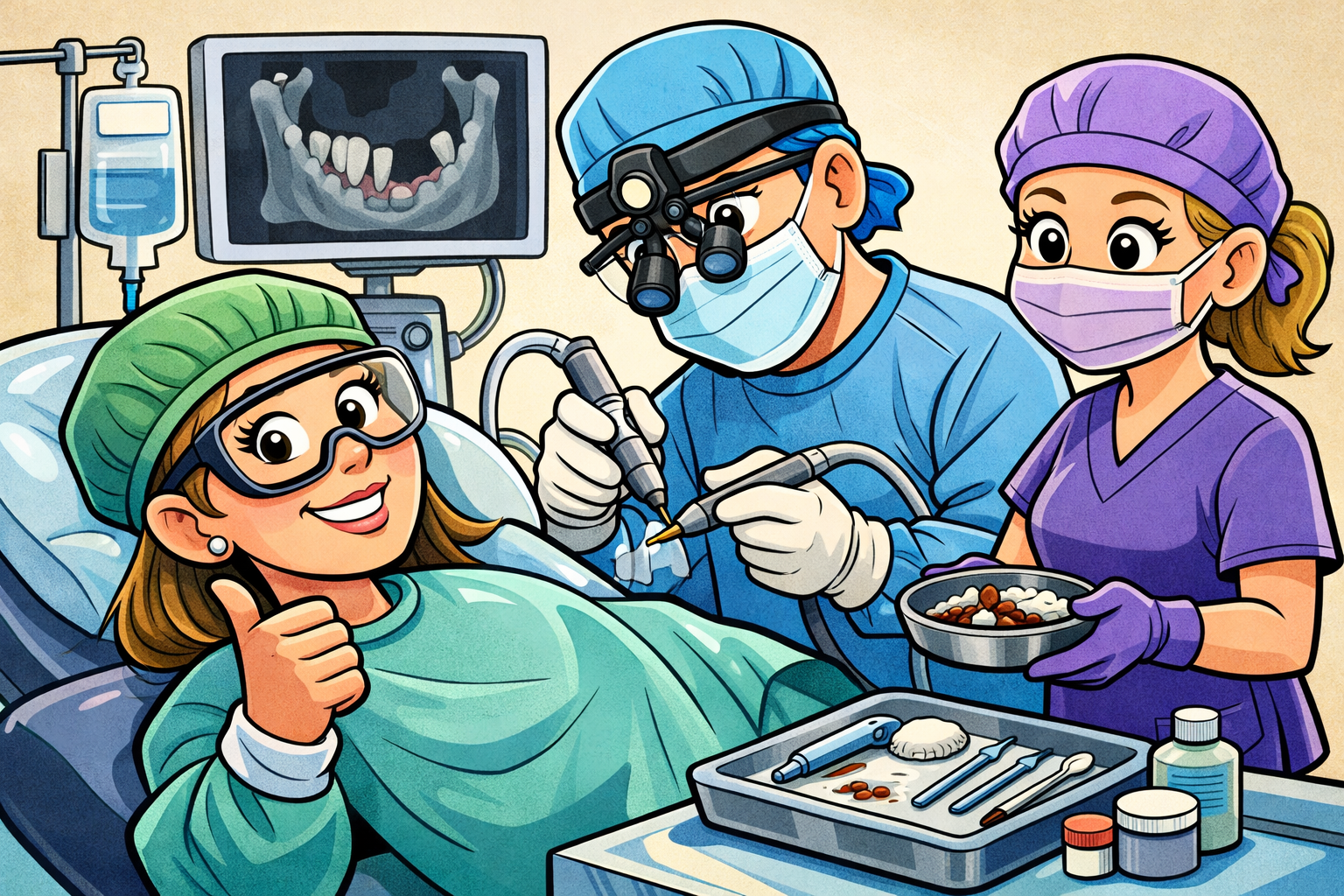
Dental cavitations—also known as ischemic osteonecrosis of the jaw (IONJ) or jawbone cavitations—are areas of dead or chronically infected bone that most often develop after tooth extractions, particularly wisdom teeth.
Unlike cavities in teeth, cavitations occur inside the jawbone. They are frequently:
Invisible on standard dental X-rays
Asymptomatic locally (no pain)
Chronically infected with bacteria, spirochetes, and inflammatory toxins
Because they often don’t hurt, they can go undetected for decades—quietly driving inflammation throughout the body.
How Do Cavitations Develop?
Cavitations typically form when:
A tooth is extracted and the bone does not heal properly
Blood flow to the area is compromised
Infection remains trapped in the jawbone
Risk factors include:
Wisdom tooth extractions
Smoking (especially at the time of extraction)
Dry socket
Chronic inflammation or immune dysregulation
Lyme disease and co-infections
The jawbone becomes an anaerobic environment, allowing stealth pathogens to persist—protected from the immune system and antibiotics.
Why a Holistic Dentist and Cone Beam CT Matter
Traditional dentistry often misses cavitations entirely.
A holistic or biologic dentist trained in systemic health understands that the mouth is not separate from the body. Using a Cone Beam CT (CBCT)—a 3D scan—they can identify:
Areas of bone degeneration
Poor healing after extractions
Chronic infection pockets
This imaging is essential. Without it, cavitations remain hidden.
Why Cavitations Matter for Chronic Disease, Lyme, and Inflammation
Cavitations act like a chronic inflammatory generator.
Long-term effects can include:
Persistent systemic inflammation
Immune dysregulation
Autonomic nervous system stress
Worsening Lyme and co-infections
Increased cardiovascular risk
Neurologic symptoms
Fatigue, brain fog, and poor detox capacity
For patients who “do everything right” but can’t fully heal—the jaw is often the missing piece.
My Story: When the Mouth Became the Missing Link
Looking back, I believe my health challenges began much earlier than my diagnosis.
I likely contracted Lyme and co-infections the summer I went to sleep-away camp in grade school. I had more mosquito bites than anyone had ever seen—many with rings around them. After that summer, my health subtly but steadily changed.
Fast forward to my late teens: I had my wisdom teeth removed. At the time, I was an unhealthy smoker and developed dry socket. I didn’t think much of it.
Years later—after mold exposure, Lyme, co-infections, and a long healing journey—I couldn’t ignore the feeling that my wisdom tooth sites were holding me back, despite never having had a single cavity in my life.
That intuition led me to Dr. Brian at Howard Dental.
The Procedure: Facing the Next Layer of Healing
We initially thought two cavitations looked concerning.
I arrived at 7:30 a.m. this morning, having spent weeks preparing the way I always do—by lowering inflammation and supporting healing:
High-dose vitamin D
Zinc
Vitamin C (Pure Synergy)
Daily glutathione
Weekly IVs
Daily hyperbaric oxygen therapy
Peptides to support tissue repair
A targeted oral product recommended by a functional dentist friend to reduce post-procedure inflammation
I even made sure to spend an hour in the hyperbaric chamber that morning, despite the early start.
The procedure was brutal—I won’t sugarcoat it.
Breaking bone, even without pain, is intense. The pressure is unmistakable. What we thought were two cavitations turned out to be four. The procedure took nearly three hours.
I am deeply grateful that our clinic manager listened to April—Dr. Brian’s incredible surgical right hand—and canceled my patients for the day.
Immediate Support: Clearing What Was Released
When I got home, I went straight into the apheresis chair.
If any inflammatory debris or pathogens were released, I wanted them out immediately.
After filtering my blood, I followed with:
10 grams IV vitamin C
1 gram phosphatidylcholine (PC)
Nutrient and fluid support
A glutathione push
Now, as I write this, I’m back in the hyperbaric chamber, using frequency-specific microcurrent, ice, and deep rest.
This weekend will be devoted entirely to nourishing healing.
Why This Matters
This is not about teeth.
This is about removing obstacles to healing.
For those with chronic illness, Lyme disease, mold toxicity, autoimmune conditions, or unexplained inflammation—dental cavitations can be the silent anchor keeping the body stuck.
I have no doubt this was the next layer of my healing journey.
A Gentle Invitation
If any part of this resonates with you—if you’ve done “everything right” and still feel stuck—I invite you to reach out.
👉 Schedule a visit with us at The Lyday Center
Let’s talk about whether cavitations, oral health, and hidden inflammation may be part of your story too.
Healing is layered. Sometimes the mouth holds the key.
— Dr. Tami Lyday, DO
The Lyday Center