Cleaning House: Our New Protocol
Cleaning House: Why Sometimes Healing Starts by Taking Out the Garbage
There is a moment in every deep healing journey when the body is trying to move forward… but something keeps pulling it backward.
Patients often tell me:
“I feel like my body is stuck.”
Stuck in inflammation.
Stuck in fatigue.
Stuck in immune chaos.
They’ve treated infections.
They’ve changed their diet.
They’ve optimized sleep and supplements.
And yet the body still behaves as if the war is still happening.
That’s because sometimes the battlefield hasn’t actually been cleared.
In medicine we often talk about pathogens — Lyme, Bartonella, Babesia, EBV, COVID and others — as the primary drivers of chronic illness.
But something equally important can remain long after the infection itself is reduced:
senescent cells.
And these cells can keep the immune system trapped in a state of constant alarm.
The Cells That Remember the War
Senescent cells are sometimes called “zombie cells.”
They are old, damaged, or dysfunctional cells that refuse to die when they should.
Instead of quietly exiting the stage, they linger in tissues releasing inflammatory signals that tell the immune system:
“Danger is still here.”
These cells often accumulate after:
• chronic infections
• viral illnesses
• toxin exposure
• severe inflammation
• aging
And once they accumulate, they can produce something known as the SASP response — the Senescence Associated Secretory Phenotype.
This means they constantly release inflammatory signals that:
• activate the immune system
• disrupt tissue repair
• impair mitochondrial function
• accelerate aging processes
Even worse?
These cells often carry the molecular memory of past infections.
So even when Lyme, Bartonella, Babesia, EBV, or COVID have been treated, the immune system may still be reacting to the signals those cells continue to send.
The result can look like:
• chronic inflammation
• autoimmune activation
• persistent fatigue
• brain fog
• slow recovery from illness
• accelerated aging
In other words:
The garbage is still in the house.
The Cleaning House Protocol
At The Lyday Center we developed a protocol designed to help the body clear this accumulated biological burden so healing can move forward.
We call it Cleaning House.
Because sometimes the most powerful thing we can do for the body is simply remove what no longer belongs there.
This protocol combines several advanced therapies that work together to reset the internal environment of the body.
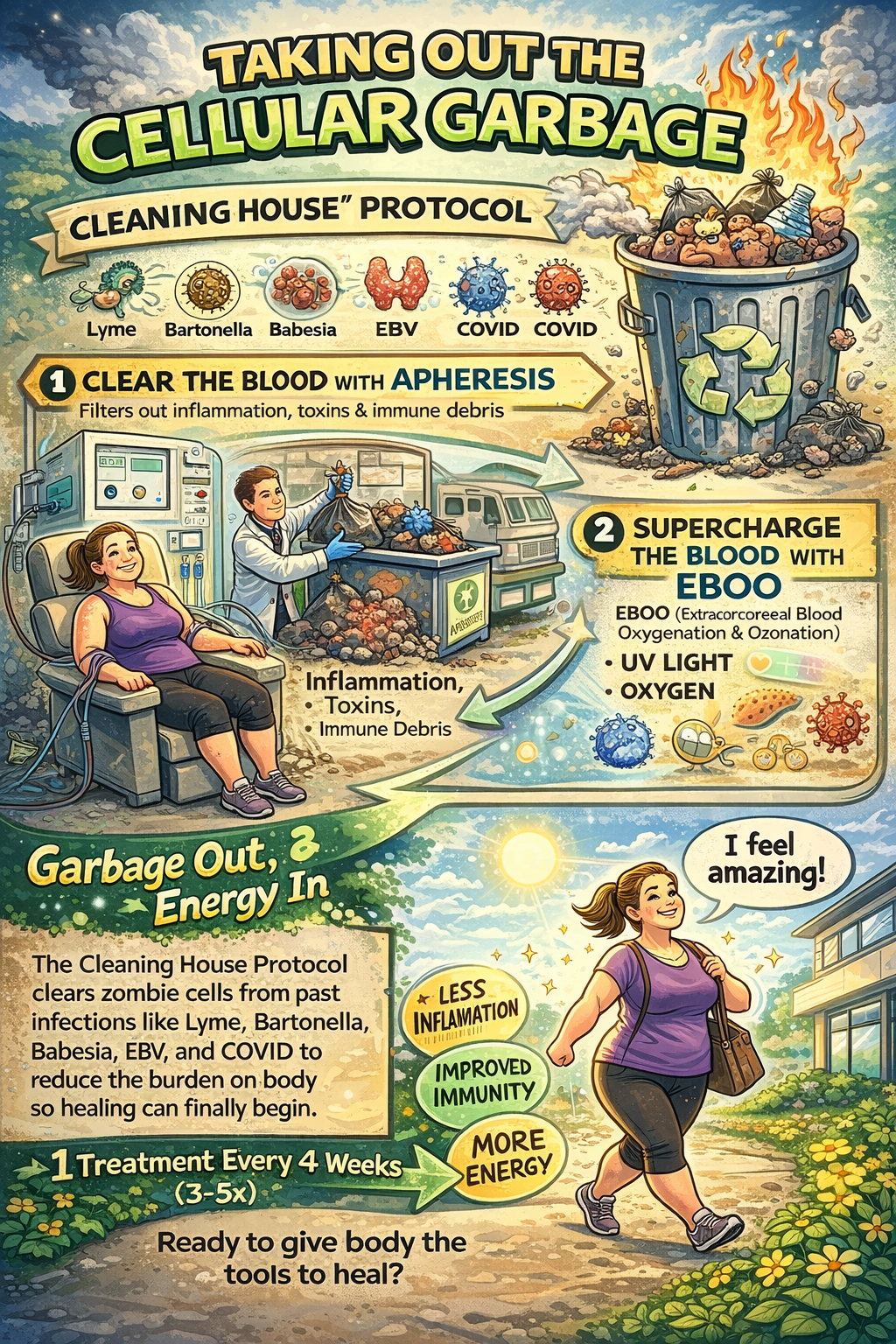
Step 1: Clearing the Blood with Apheresis
The first step is therapeutic plasma exchange (TPE), also known as apheresis.
During this process, blood is gently circulated through a specialized system that separates and filters plasma.
Plasma is where many inflammatory molecules and immune complexes circulate.
By filtering and replacing this plasma, apheresis can help reduce:
• circulating inflammatory mediators
• immune complexes
• toxic proteins
• metabolic debris
In essence, it helps reduce the inflammatory load the body is carrying every day.
Think of it as giving the immune system a moment to breathe again.
Step 2: Supercharging the Blood with EBOO
Once the inflammatory burden is reduced, we move to the next step.
EBOO (Extracorporeal Blood Oxygenation and Ozonation).
This therapy circulates blood through a specialized chamber where it is exposed to controlled oxygenation and ozone therapy before returning to the body.
Why does this matter?
Because oxygen is one of the most powerful tools for cellular metabolism.
Enhanced oxygenation can support:
• mitochondrial function
• improved circulation
• enhanced immune response
• metabolic recovery
Many patients describe this phase as “turning the power back on.”
Step 3: Light Therapy for Cellular Energy
During EBOO, the blood also passes through UV light therapy, which has been studied for decades for its potential effects on immune modulation and microbial balance.
Light interacts directly with blood components and may support improved cellular communication and energy production.
For mitochondria — the energy engines of our cells — light and oxygen together create a powerful environment for recovery.
Supporting the Body During the Process
Throughout the procedure we carefully support the body with intravenous fluids and minerals to maintain optimal electrolyte balance and hydration.
At the end of treatment, we also have the option of adding advanced regenerative therapies such as:
• exosomes to support cellular signaling
• stem cells to assist tissue repair
• phosphatidylcholine (PC) to support membrane rebuilding and detoxification
These additions help the body shift from clearing damage to rebuilding strength.
Why This Matters for Chronic Illness
Many chronic illnesses share a common theme:
The body is stuck in inflammatory survival mode.
Even when infections are treated or toxins are removed, the immune system may continue reacting to signals that are still circulating.
By reducing inflammatory burden and supporting cellular energy production, the Cleaning House protocol helps create a physiological environment where healing can finally move forward.
It is not about forcing the body to heal.
It is about removing the obstacles that prevent healing from happening naturally.
What the Protocol Looks Like
For most patients, the Cleaning House protocol involves:
One treatment every four weeks
for a total of three to five sessions.
Patients with advanced autoimmune or inflammatory conditions may require additional treatments depending on their individual physiology.
Every protocol is personalized to the patient.
Taking Out the Garbage So Healing Can Begin
The body is remarkably intelligent.
When the internal environment is right, tissues know how to repair themselves.
Mitochondria know how to produce energy.
The immune system knows how to recalibrate.
Sometimes the only thing standing in the way is the biological debris left behind by years of illness.
And once that debris is cleared…
The body can finally move forward.
A New Chapter in Longevity and Recovery
Advanced therapies like these were once available only in specialized research centers.
Today, a small number of clinics across the country are beginning to explore how these technologies can support patients struggling with chronic inflammatory disease.
At The Lyday Center, we believe the future of medicine lies in combining advanced technology with root-cause thinking.
Because the goal is not simply to treat disease.
The goal is to restore vitality, resilience, and life.
And sometimes that starts with something very simple.
Cleaning house.