
MCAS, Allergies and the Root Cause…
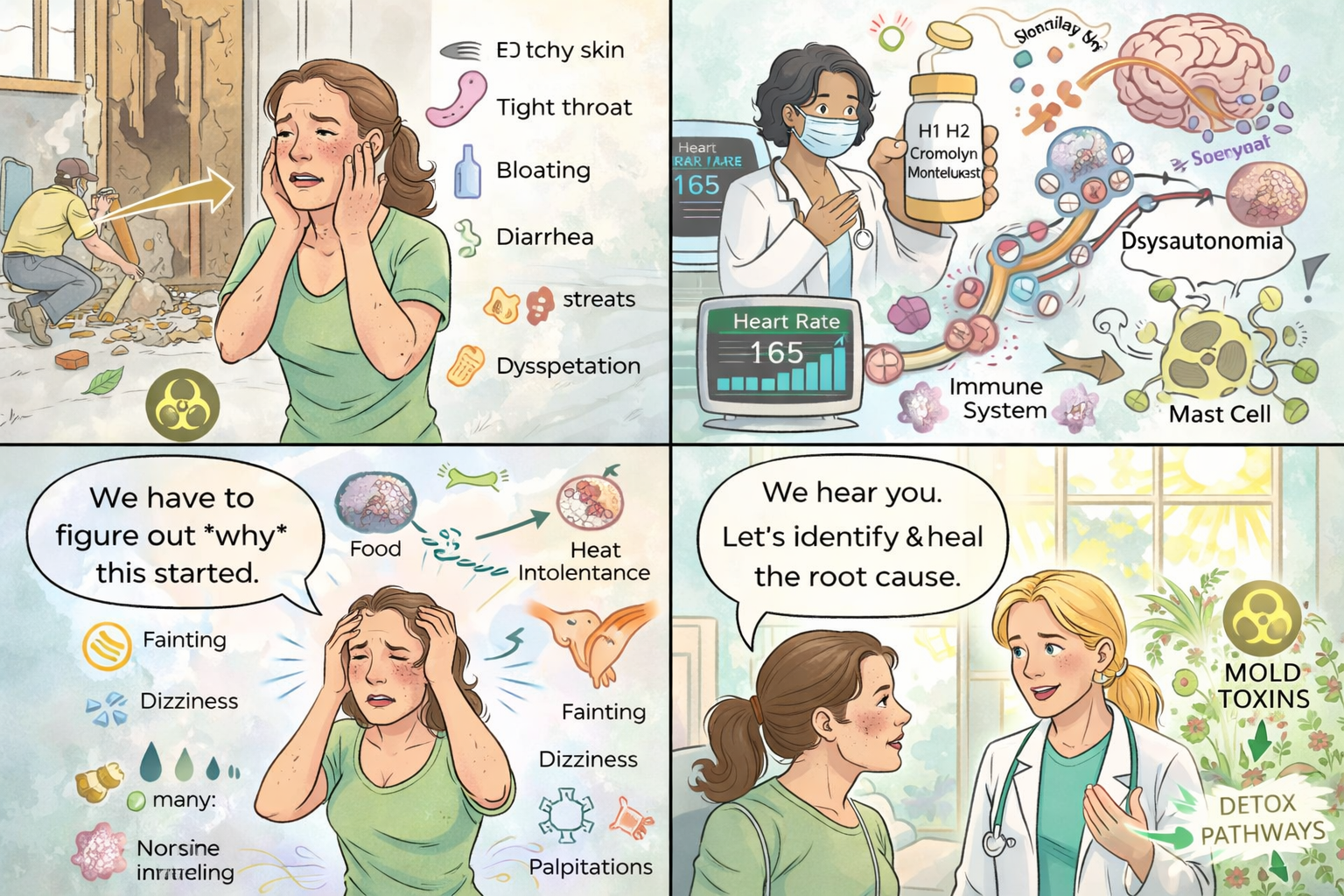
MCAS, Allergies, and the Root Cause No One Talks About
One of the most heartbreaking patterns I see in clinic is how often patients with mast cell activation symptoms are told they simply need another medication, another specialist, or to accept that this is “just how their body is.”
This week, I met a patient who changed that narrative in a powerful way.
She is a highly trained conventional nurse—smart, observant, and deeply invested in her own health. And yet, like so many others, she had no idea there could be a root cause to MCAS. No one had ever connected the dots for her.
What she thought were separate problems—allergies, cardiac arrhythmias, GI symptoms, itching, swelling, fainting, brain fog—were actually chapters of the same story.
That story?
👉 Chronic mold exposure in a susceptible individual.
What Is MCAS—Really?
Mast Cell Activation Syndrome (MCAS) occurs when mast cells—immune cells meant to protect us—become chronically over-activated.
Instead of responding only to true threats, they begin reacting to:
Foods
Weather changes
Smells
Stress
Exercise
Hormonal shifts
Medications
This leads to symptoms like:
Facial swelling, itching, hives
Throat tightness, airway symptoms
GI pain, reflux, diarrhea or constipation
Brain fog, fatigue
Palpitations, dizziness, fainting
Anxiety or panic sensations
Sensitivity to everything
Patients are often labeled:
“Allergic”
“Anxious”
“Somatic”
“Too sensitive”
But the real issue isn’t sensitivity.
It’s a nervous and immune system stuck in survival mode.
How Mold Tips the Immune System Into Chaos
In genetically and biologically susceptible individuals, mold exposure is one of the most powerful triggers for mast cell dysregulation.
Here’s why:
Mold toxins (mycotoxins) directly activate mast cells
They disrupt the gut barrier, increasing immune signaling
They inflame the nervous system
They impair detox pathways
They keep the immune system in a constant “on” position
Over time, mast cells stop responding proportionally.
They start reacting constantly.
In this patient’s case, symptoms escalated after a home remediation event, when walls were torn open—an exposure moment that many patients don’t realize can be worse than visible mold itself.
Shortly after, her body spiraled:
Severe allergic reactions
Progressive food intolerance
GI inflammation
Neurologic symptoms
And eventually cardiac rhythm disturbances (SVT)
No one had asked why.
MCAS and Dysautonomia: The Double Hit
MCAS rarely travels alone.
When mast cells stay activated long enough, they begin to disrupt the autonomic nervous system, leading to conditions like:
POTS
Dysautonomia
Blood pressure instability
Heart rate abnormalities
Exercise intolerance
Fainting
Temperature regulation issues
This is why patients feel:
“My body just doesn’t regulate anything anymore.”
Because it doesn’t.
The immune system and nervous system are in constant cross-talk—and mold keeps pulling the fire alarm.
Why Medications Alone Aren’t Enough
Antihistamines, cromolyn, acid blockers, leukotriene inhibitors—these can reduce symptoms, and sometimes they’re necessary.
But they are not curative if the trigger remains.
Without addressing root cause:
Mast cells stay primed
Dysautonomia worsens
Food lists shrink
Fatigue deepens
Quality of life erodes
Patients don’t need more pills.
They need answers.
The Power of Root Cause Medicine
At TLC, we ask different questions:
Why did this start?
What tipped the system out of balance?
What exposures preceded the symptoms?
Why did this body lose tolerance?
And most importantly:
How do we help the body feel safe again?
Because when the trigger is removed, detox pathways are supported, and the nervous system is stabilized—mast cells can calm down.
Food tolerance can return.
Symptoms can quiet.
Life can feel livable again.
A Message to Every Warrior Who Has Been Dismissed
If you’ve been told:
“Your tests are normal”
“It’s anxiety”
“Just avoid everything”
“This is chronic”
Please hear this:
You are not broken.
Your body is responding to something real.
And with the right lens, the right testing, and the right care—that response can be reversed.
At TLC, we listen.
We connect the dots.
And we don’t stop until the story finally makes sense.
Because healing doesn’t happen by managing symptoms—it happens by addressing why they started in the first place.
You are not alone.
And your body is not betraying you.
It’s asking for help.