Anti-Aging Isn’t About Looking Younger Anymore
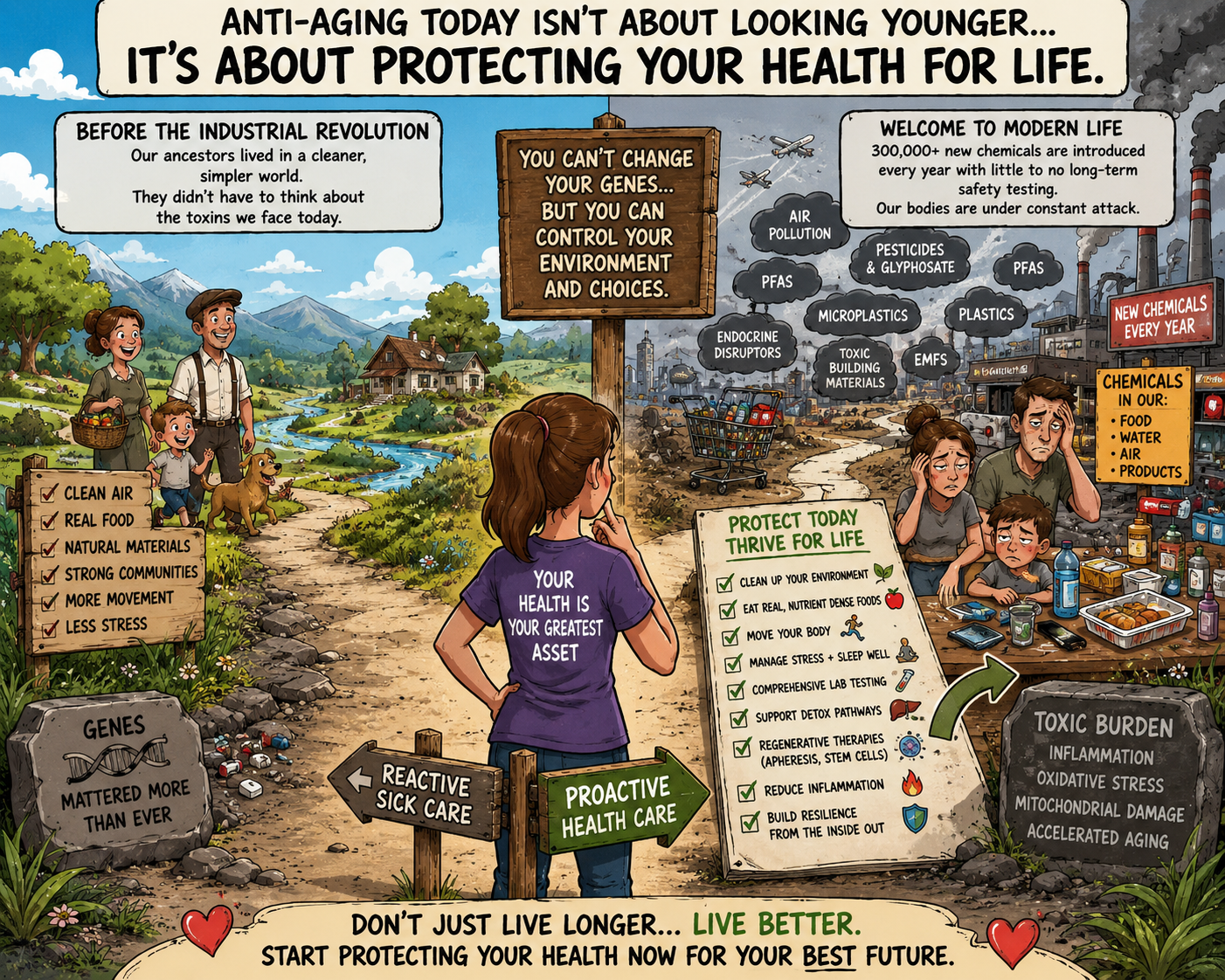
Anti-aging starts now
Anti-Aging Isn't About Looking Younger Anymore.
It's About Surviving the World We Now Live In.
There was a time when "anti-aging" meant wrinkle creams.
Botox.
Facials.
A little vanity.
Not anymore.
Today, anti-aging has become something entirely different.
It's about protecting the one thing that allows you to enjoy every birthday, every vacation, every grandchild, every sunrise.
Your health.
Your Great-Grandparents Didn't Have This Problem
Before the Industrial Revolution, our bodies were exposed to toxins.
Smoke.
Natural molds.
Heavy metals in certain environments.
But nothing compared to today.
Today we live in a world where we are surrounded by synthetic chemicals before we even get out of bed.
Plastics.
Pesticides.
Herbicides.
PFAS.
Microplastics.
Air pollution.
Water contaminants.
Endocrine disruptors.
Food additives.
Cosmetics.
Cleaning products.
Building materials.
Electronics.
And thousands of compounds that didn't even exist one or two generations ago.
The pace is staggering.
Every year, new chemicals are introduced into our environment, while our understanding of their long-term effects often lags far behind.
Meanwhile...
Our bodies are expected to process all of it.
Your Genes Didn't Change.
Your Environment Did.
One of the biggest myths I hear is:
"My parents lived into their 90s, so I'll probably be fine."
Maybe.
Maybe not.
Your genes are only one piece of the equation.
Your grandparents weren't exposed to the chemical burden you're carrying today.
They weren't breathing modern indoor air.
They weren't drinking from plastic every day.
They weren't living in water-damaged buildings filled with synthetic construction materials.
They weren't carrying smartphones against their bodies 16 hours a day.
They weren't surrounded by the environmental load we accept as "normal."
Your genetics haven't changed.
Your environment has.
My Own Wake-Up Call
When I first moved to Wisconsin, I decided to measure my own toxic burden.
What I found surprised me.
Despite doing "everything right," my glyphosate levels had climbed dramatically after living just a few years in one of the most agriculturally productive regions in the country.
Nothing about my lifestyle had changed dramatically.
The environment had.
That was a powerful reminder that none of us are immune to the world we live in.
We don't have to be careless to accumulate toxins.
Sometimes we simply have to exist.
Stop Waiting Until You're Sick
One of the things people misunderstand about our clinic is that they think we only see very sick patients.
Yes.
We help patients with mold illness.
Lyme disease.
Autoimmune disease.
Long COVID.
Neurodegeneration.
Complex chronic illness.
But one of my favorite patients?
The healthy one.
The executive who wants to stay sharp.
The athlete who wants longevity.
The grandmother who wants to dance at her granddaughter's wedding twenty years from now.
The forty-year-old who wants to prevent disease instead of reacting to it.
That's where medicine should be headed.
The New Definition of Anti-Aging
Anti-aging isn't chasing youth.
It's preserving function.
Keeping your brain healthy.
Protecting your blood vessels.
Supporting your immune system.
Reducing inflammation.
Maintaining muscle.
Protecting mitochondria.
Optimizing detoxification.
Building resilience long before disease develops.
Imagine never waiting for diabetes before taking care of your metabolism.
Never waiting for dementia before protecting your brain.
Never waiting for arthritis before supporting your joints.
Never waiting for burnout before regulating your nervous system.
That's anti-aging.
What Does Prevention Actually Look Like?
For each person, it may be different.
It starts with understanding your body.
Not guessing.
Knowing.
Looking at:
Comprehensive laboratory testing
Inflammatory markers
Nutrient status
Hormones
Cardiometabolic health
Immune function
Environmental exposures
Body composition
Genetic tendencies when appropriate
From there, we build a plan.
For some people, that's improving sleep and nutrition.
For others, it's reducing toxic exposures.
For some, it's building muscle and improving metabolic health.
For others, it may include advanced regenerative therapies.
Why We Believe in Regenerative Medicine
People often ask me why someone who is healthy would consider therapies such as regenerative medicine.
Because maintaining health is far easier than trying to recover it after years of decline.
Our bodies naturally lose regenerative capacity as we age.
Supporting the body's ability to repair itself is an area of active scientific research, and regenerative approaches continue to be investigated for their potential role in recovery from injury and degenerative disease.
Likewise, therapies that reduce inflammatory burden or support physiologic resilience may have a place in an individualized longevity strategy when used thoughtfully and appropriately.
The goal isn't to chase youth.
The goal is to preserve vitality.
Your Health Is Your Greatest Investment
People invest thousands of dollars into:
Their homes.
Their retirement.
Their businesses.
Their vacations.
But the one thing that determines whether they'll actually enjoy any of those investments...
Is their health.
You only get one brain.
One heart.
One immune system.
One body.
Protect it.
Not because you're afraid of getting older.
Because you want to experience every stage of life with strength, clarity, energy, and purpose.
The Future of Medicine
I truly believe medicine is changing.
The future won't simply be about treating disease.
It will be about preserving health.
Helping people stay vibrant.
Helping them think clearly into their 80s and 90s.
Helping them continue hiking, traveling, playing with grandchildren, building businesses, and pursuing dreams.
Not because we stopped aging.
Because we started respecting our biology long before disease arrived.
That's the future I'm excited to be part of.
And that's why I believe anti-aging should begin long before anyone thinks they need it.
Because your greatest asset isn't your career.
It isn't your home.
It isn't your investment portfolio.
It's your health.
Protect it accordingly.
Absolutely. I would end the blog with something practical and actionable. Rather than trying to do everything at once, these are habits that provide a high return on investment and are supported by varying degrees of evidence for healthy aging.
Dr. Lyday's Longevity Hacks
Simple Things You Can Start Today
You don't have to spend thousands of dollars to begin investing in your future health.
Here are some of my favorite evidence-informed longevity habits.
1. Build Muscle
If I could prescribe one "anti-aging medication," it would be resistance training.
Muscle is one of the strongest predictors of healthy aging. It improves:
Insulin sensitivity
Bone density
Metabolism
Balance
Independence
Overall lifespan
Goal: Strength train 2–4 times per week.
2. Prioritize Protein
Most people don't eat enough protein as they age.
Aim for approximately:
1.2–1.6 g/kg/day for healthy older adults (individual needs vary)
Include protein with every meal.
3. Sleep Like It's Medicine
Sleep is where your brain clears metabolic waste, your immune system recalibrates, and your body repairs itself.
My sleep essentials:
No phone after 8 PM
No devices in the bedroom
Red light therapy
Cool room (65°F)
Wake with gradual light instead of a loud alarm
4. Protect Your Mitochondria
Healthy mitochondria mean better energy and healthier aging.
I personally focus on:
Regular exercise
Time outdoors
Healthy nutrition
Red and near-infrared light therapy
Adequate sleep
Some supplements may support mitochondrial health in appropriate patients:
CoQ10 (especially if taking statins)
Magnesium
Omega-3 fatty acids
Creatine (also supports muscle and cognitive function)
Nicotinamide riboside (NR) or nicotinamide mononucleotide (NMN) remain areas of active research; human evidence is still evolving.
5. Reduce Your Toxic Burden
You don't have to live in fear.
Just make better choices more often.
Think about:
Drinking filtered water
Improving indoor air quality
Avoiding smoking and secondhand smoke
Choosing glass or stainless steel over plastic when practical
Reducing unnecessary pesticide exposure when feasible
6. Keep Blood Sugar Stable
One of the fastest ways to accelerate aging is chronically elevated blood sugar.
Focus on:
Whole foods
Daily movement
Strength training
Maintaining a healthy weight
Managing diabetes or prediabetes with your healthcare team
7. Calm Your Nervous System
Healing doesn't happen when your brain thinks you're constantly running from a tiger.
Daily nervous system practices may include:
Meditation
Deep breathing
Time in nature
Prayer or mindfulness
Vagal nerve exercises
Programs like Primal Trust, when appropriate
8. Know Your Numbers
Don't wait until disease develops.
Periodically discuss appropriate screening with your healthcare provider, such as:
Blood pressure
Blood sugar (A1c)
Lipids
Kidney and liver function
Nutrient status when indicated
Body composition rather than just body weight
9. Spend Time in Nature
Nature lowers stress hormones, improves mood, and encourages movement.
It's one of the cheapest longevity interventions available.
10. Stay Connected
Strong relationships consistently rank among the most important predictors of longevity.
Protect your community as fiercely as you protect your diet.
My Favorite Supplements for Healthy Aging
Not everyone needs every supplement. I tailor recommendations to the individual, but commonly considered options include:
High-quality omega-3 fatty acids
Magnesium glycinate or threonate (depending on goals)
Vitamin D (if deficient or insufficient)
Vitamin K2 (when appropriate)
Creatine monohydrate
CoQ10 (particularly for statin users)
Curcumin for some patients with chronic inflammation
A quality probiotic or targeted microbiome support when indicated
For select patients, after careful evaluation, we may also discuss more advanced therapies such as:
Peptide therapies
Hyperbaric oxygen therapy
Regenerative medicine
Therapeutic plasma exchange (apheresis)
Personalized nutrition and exercise programs
These are not "magic bullets," but they may have a role as part of a comprehensive, individualized longevity strategy.
Remember...
Longevity isn't about trying to live forever.
It's about giving yourself the best chance to be hiking with your spouse at 80, traveling at 85, dancing at your grandchildren's weddings, and still waking up excited about the day ahead.
The best time to start protecting your future health was 20 years ago.
The second-best time is today.