The Center for Misfit Toys
The Center for Misfit Toys
How Imposter Syndrome Led Me to Become the Healer I Was Always Meant to Be
I knew what I wanted to be before I even knew how to spell it.
At five years old, I wanted to be a doctor.
There wasn't a backup plan.
There wasn't another dream.
Some children dream of becoming astronauts or ballerinas or firefighters.
I wanted to heal people.
Looking back now, I don't think that was simply a childhood dream.
I think it was my soul's assignment.
The Dream Evolves
As I worked my way through medical school, residency, and fellowship training, something unexpected happened.
I realized that being a physician and being a healer were not always the same thing.
Being a physician teaches you how to diagnose disease.
Being a healer teaches you how to see a human being.
Those aren't always taught together.
I became grateful for everything conventional medicine taught me. It gave me a strong scientific foundation and taught me how to recognize and manage serious illness.
But I also found myself asking questions that weren't being answered.
Why are so many people still sick?
Why do patients keep hearing, "Your labs are normal," when they know something is deeply wrong?
Why do we become so good at naming diseases but sometimes struggle to understand why they developed in the first place?
Those questions eventually led me to my first functional medicine conference in Arizona.
I still remember walking into that room.
It felt like coming home.
These were my people.
They weren't talking about covering symptoms.
They were talking about nutrition.
Environmental toxins.
The microbiome.
Inflammation.
Hormones.
The nervous system.
Root causes.
The body's incredible capacity to heal when given the right conditions.
This was the medicine I had imagined as a little girl.
Not because it was glamorous.
Because it was deeply human.
The Secret I Carried
There was just one problem.
I didn't look like what I thought a functional medicine doctor was supposed to look like.
Maybe you've noticed the stereotype.
Perfectly styled blonde hair.
Flawless skin.
Designer clothes.
The body of a fitness model.
The picture of effortless vitality.
That wasn't me.
And for years, I let that hold me back.
I worried that people would look at me and wonder,
"Why would I take health advice from her?"
That fear became my own version of imposter syndrome.
So I did what many people do when they don't feel like they're enough.
I overcompensated.
I learned.
And then I learned some more.
If there was a conference...
I was there.
If there was a certification...
I wanted it.
If there was a paper...
I read it.
If there was a new therapy...
I studied it.
If I couldn't be the thinnest...
I would become one of the best-trained physicians I could possibly be.
Not because I wanted letters behind my name.
Because I wanted every patient sitting across from me to know I would never stop searching for answers.
The Camp for Misfit Toys
This morning I was playing Match Game, and the "Island of Misfit Toys" came on.
And suddenly it hit me.
That's us.
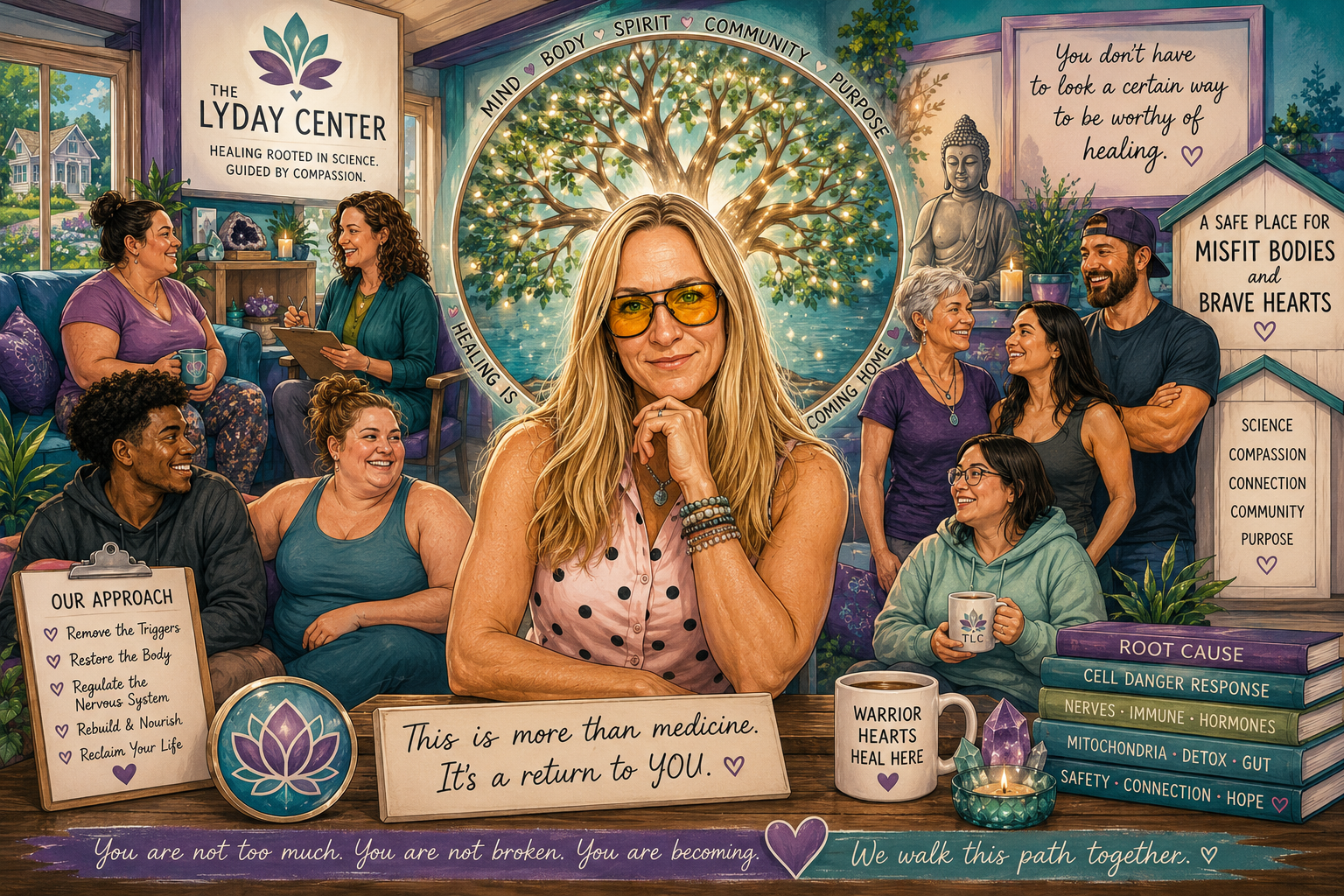
The Lyday Center is the Camp for Misfit Toys.
Not because anyone who walks through our doors is broken.
But because so many of our patients have spent years feeling like they don't belong.
They've walked into clinics where they felt judged.
Dismissed.
Too complicated.
Too sensitive.
Too tired.
Too overweight.
Too anxious.
Too many symptoms.
Too many questions.
Too many normal labs.
Too much.
They've started believing that maybe they're the problem.
They're not.
They're simply waiting for someone to understand their story.
You Belong Here
Yesterday I met a new warrior.
She shared her story of living with Lyme disease and multiple coinfections.
As she spoke, tears filled her eyes.
Then mine.
Because I recognized that look.
It's the look of someone who has been carrying far more than anyone else realizes.
At The Lyday Center, we don't expect people to arrive looking like the cover of a fitness magazine.
We don't expect perfection.
We don't expect you to have it all together.
We don't care what size your jeans are.
We don't care if you've been sick for six months or sixteen years.
We care that you're here.
Because healing doesn't belong only to people who already look healthy.
Healing belongs to everyone.
The Greatest Gift
Some people may never choose me because I don't fit their idea of what a wellness doctor should look like.
That's okay.
Their decision says more about the picture they're searching for than it does about me.
What I've realized is that the very thing I thought disqualified me has become one of my greatest strengths.
People feel safe here.
They don't feel judged.
They don't feel like they have to pretend.
They don't feel like they have to apologize for their bodies.
They simply get to begin healing.
And maybe that's exactly what a healer is supposed to create.
Not perfection.
Safety.
Hope.
Belonging.
Stardom Isn't What I Thought
When I was younger, I thought success meant being recognized.
Now I know better.
Success is watching someone laugh for the first time in years.
It's seeing brain fog lift.
It's hearing a patient say, "I finally feel like myself again."
It's watching someone who thought their life was over begin dreaming about the future.
That's the kind of stardom I'm interested in.
Not standing under a spotlight.
Standing beside another human being while they find their way back to themselves.
If You've Ever Felt Like a Misfit...
Maybe you've been told you're too sick.
Too emotional.
Too sensitive.
Too overweight.
Too complicated.
Too much.
I want you to know something.
There is a place for you.
There is hope for you.
And there are people who will see you—not as a diagnosis, not as a number on a scale, not as a lab value—but as a whole human being worthy of healing.
You don't have to be perfect to begin.
You just have to show up.
Bring your warrior heart.
Be willing to take the next step.
We'll walk the path together.
And if you stumble, we'll be there to help you get back up.
Because that's what healers do.
And maybe that's what I was meant to become all along.