
The Passing Of Dawson Today…Colon Cancer Awareness
James Van Der Beek and the Wake-Up Call About Colorectal Cancer
This week, we learned of the passing of James Van Der Beek at age 48 after a battle with colorectal cancer.
He was young. Well-known. Well-connected. A father. A husband. Someone with access to resources and medical care.
And yet — colorectal cancer still claimed his life.
His death is heartbreaking. It is also a sobering reminder that colorectal cancer does not discriminate. It is rising in younger adults. And it is often silent until it is advanced.
But here’s the truth that matters most:
Colorectal cancer is one of the most preventable cancers we know — if we screen for it.
Screening Now Begins at Age 45
The U.S. Preventive Services Task Force now recommends that average-risk adults begin screening at age 45.
Why? Because colorectal cancer is increasingly being diagnosed before age 50.
Colon cancer typically begins as polyps — small growths in the colon lining. These polyps can be identified and removed before they ever become cancer.
That is prevention.
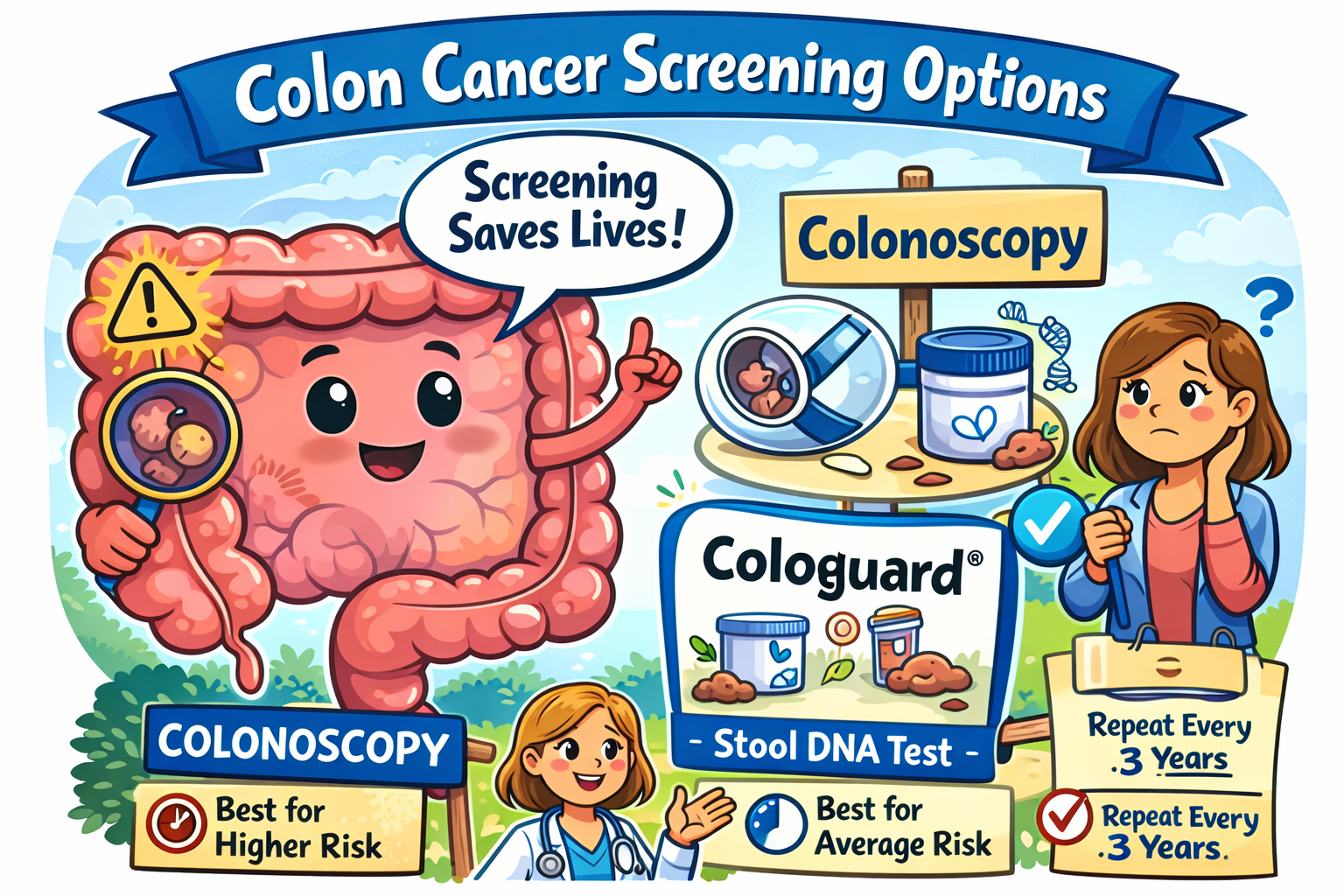
Colonoscopy vs. Cologuard: What’s the Difference?
🩺 Colonoscopy — The Gold Standard
Best for:
Individuals 45+
Anyone with family history
Those with symptoms
Higher-risk individuals
What it does:
Direct visualization of the entire colon
Immediate removal of polyps
Biopsy of suspicious areas
If normal, it is typically repeated in 10 years.
Colonoscopy is both diagnostic and therapeutic.
🧪 Cologuard (Stool DNA Testing)
Best for:
Average-risk individuals
Those without symptoms
Patients hesitant about colonoscopy
What it detects:
Blood in the stool
DNA markers associated with advanced polyps or cancer
If negative → repeat every 3 years
If positive → colonoscopy is required
It is a screening tool — not a treatment tool.
What Are They Looking For?
Screening identifies:
Adenomatous polyps (pre-cancerous)
Serrated polyps
Early tumors
Occult bleeding
Inflammatory changes
The goal is not just early detection — it is interruption of the cancer pathway.
Warning Signs of Colon Cancer
Never ignore:
Blood in stool (bright red or dark/maroon)
Persistent abdominal fullness or bloating
Change in bowel habits
Narrow stools
Unintentional weight loss
Fatigue (possible anemia)
Ongoing abdominal discomfort
If you have symptoms, do not wait for routine screening. Get evaluated.
Gut Health: The Terrain Matters
In functional medicine, we believe that gut health is foundational.
Your colon is not just a digestive tube. It is:
A major immune organ
A microbiome ecosystem
A regulator of inflammation
A barrier between the outside world and your bloodstream
Chronic inflammation, dysbiosis, processed food exposure, and mucosal injury all influence the terrain in which disease develops.
Supporting gut health includes:
Removing inflammatory trigger foods
Increasing whole-food fiber (as tolerated)
Reducing ultra-processed foods
Optimizing vitamin D levels
Supporting microbiome diversity
Healing intestinal permeability
Supporting mucosal integrity
We cannot promise prevention of every cancer.
But we can support a healthier internal environment.
The Hard Truth
James Van Der Beek had access to care. He was not negligent. He was not uninformed.
And still, cancer happened.
Prevention is not about fear. It is about proactive action.
If you are 45 or older — schedule screening.
If you are younger and experiencing symptoms — get evaluated.
If you want to strengthen your gut health and reduce inflammatory burden — let’s create a plan.
Moving Forward
Cancer does not care about fame, success, or connections.
But screening saves lives.
And prevention is powerful.
If you would like to focus on:
Personalized gut healing
Leaky gut repair
Anti-inflammatory nutrition
Microbiome restoration
Colon cancer risk reduction strategies
Schedule a visit. Let’s take action now — not later.
— Dr. Tamara Lyday
The Lyday Center