
Let’s get INTIMATE - It’s Valentine’s Day
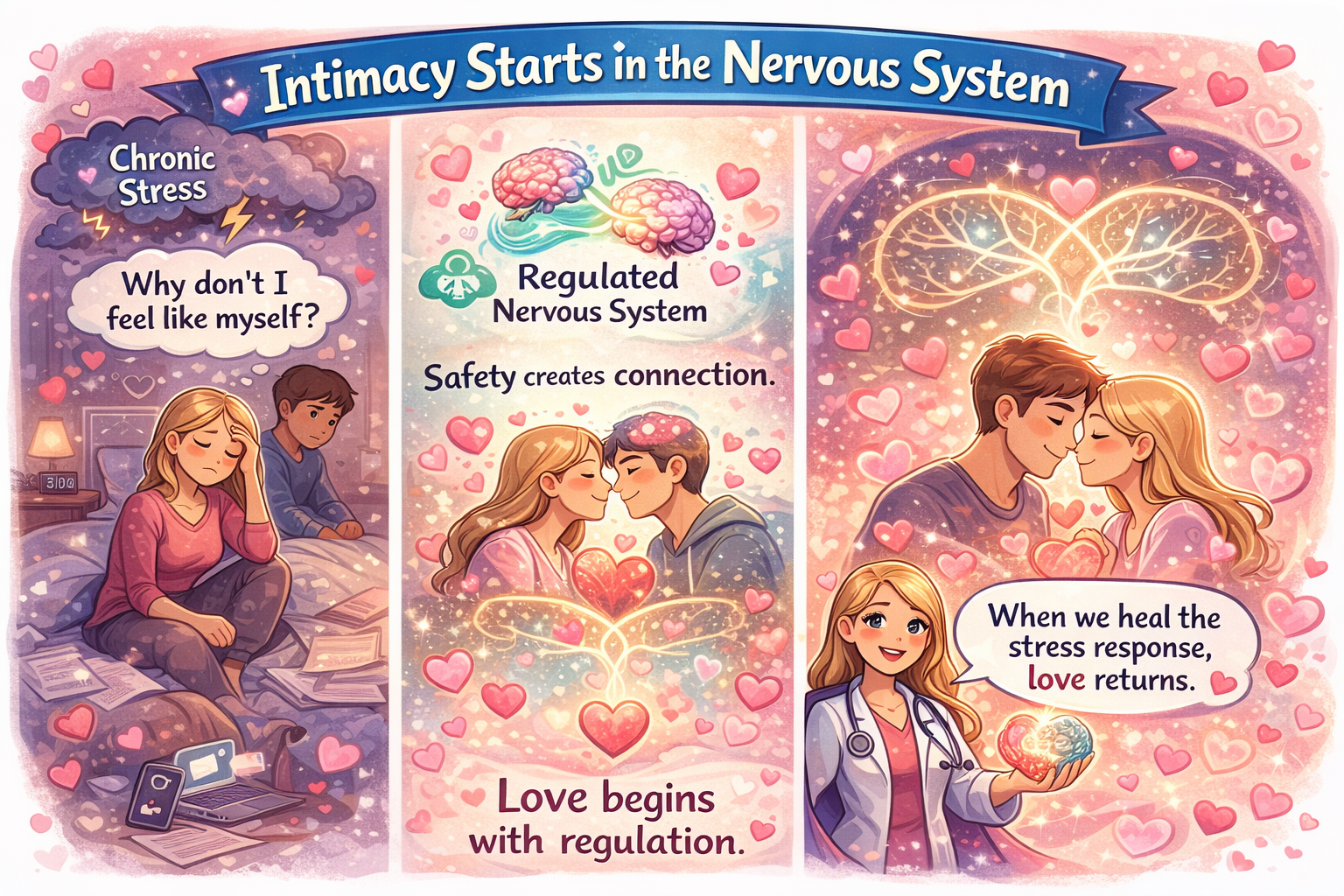
💗🌹Intimacy Starts in the Nervous System💗🌹
A Valentine’s Day Reflection on Stress, Hormones, and Connection
Valentine’s Day tends to focus on flowers, chocolates, and candlelit dinners.
But real intimacy — the kind that feels safe, alive, and connected — doesn’t begin in the bedroom.
It begins in the nervous system.
And if your nervous system is exhausted, inflamed, overstimulated, or stuck in fight-or-flight, no amount of romance can override biology.
The Physiology of Love
When you feel safe, your body shifts into parasympathetic mode — the “rest, digest, and connect” state.
In this state:
Oxytocin rises
Sex hormones function optimally
Blood flow improves
Desire becomes possible
Emotional openness increases
But when you are chronically stressed?
Cortisol dominates.
And cortisol changes everything.
When Stress Steals Intimacy
Chronic stress — whether from work, parenting, caregiving, mold illness, chronic inflammation, or simply modern life — dysregulates the HPA axis (the brain-adrenal connection).
Over time, this can lead to:
Low libido
Irritability
Emotional withdrawal
Fatigue
Sleep disruption
Hormone imbalance
Anxiety or depression
Cortisol literally steals from progesterone and suppresses sex hormone signaling. It shifts blood flow away from reproductive organs. It tells your body: “This is not a safe time to reproduce.”
And your body listens.
Many patients blame themselves. They assume something is wrong with their relationship. Or their partner. Or their motivation.
Often, it’s physiology.
Chronic Illness and Connection
For those healing from mold illness, Lyme, autoimmune disease, or chronic inflammatory conditions, the nervous system has often been on high alert for years.
Hypervigilance.
Inflammation.
Fatigue.
Adrenal dysregulation.
Thyroid shifts.
Neuroinflammation.
Intimacy requires safety.
Safety requires regulation.
Regulation requires healing.
This is why restoring the nervous system is foundational.
What Helps Restore Intimacy Biologically
Healing the nervous system and supporting hormone balance may include:
Restoring cortisol rhythm
Supporting thyroid function
Reducing systemic inflammation
Addressing gut health and nutrient absorption
Optimizing sex hormones when appropriate
Nervous system retraining and vagal support
Improving sleep architecture
Sometimes this means peptides.
Sometimes it means IV therapy.
Sometimes it means mold remediation.
Sometimes it means trauma work.
Often, it means all of the above.
Because intimacy is not just psychological.
It is biochemical.
A Valentine’s Day Invitation
If you feel disconnected from your partner…
If you feel too tired to feel desire…
If your body feels inflamed, wired, or depleted…
If your hormones feel unpredictable…
This is not a personal failure.
It may be your nervous system asking for support.
This Valentine’s Day, instead of asking:
“How do I feel more romantic?”
Ask:
“How safe does my body feel?”
Love begins with regulation.
Connection begins with safety.
Intimacy begins in the nervous system.
If you would like to explore how stress physiology, adrenal rhythm, thyroid health, gut health, and hormones may be influencing your energy and intimacy, schedule a visit.
Let’s restore the biology that makes connection possible.
With compassion and intention,
Dr. Tamara Lyday
The Lyday Center