
The World Needs To Know Her Story…
Mold exposure, chronic illness, fibromyalgia
Have You Ever Met Someone and Instantly Thought: The World Needs to Know Her Story?
Every once in a while, someone walks into your life and you immediately think:
This person needs a reality show.
Not because her life is glamorous.
Because it is real.
I have always been fascinated by people and their backstories. It is probably why I have watched Intervention for years—and why my favorite books and shows are almost always about real people overcoming extraordinary circumstances.
I want to know what made someone who they are.
Where did that toughness come from?
What mountains did they have to climb?
What happened when life knocked them down—and what made them get back up?
Yesterday, I met one of those people.
I am intentionally leaving out identifying details because she deserves her privacy. But after spending a long initial consultation listening to her story, I couldn't stop thinking:
Someone should document this journey.
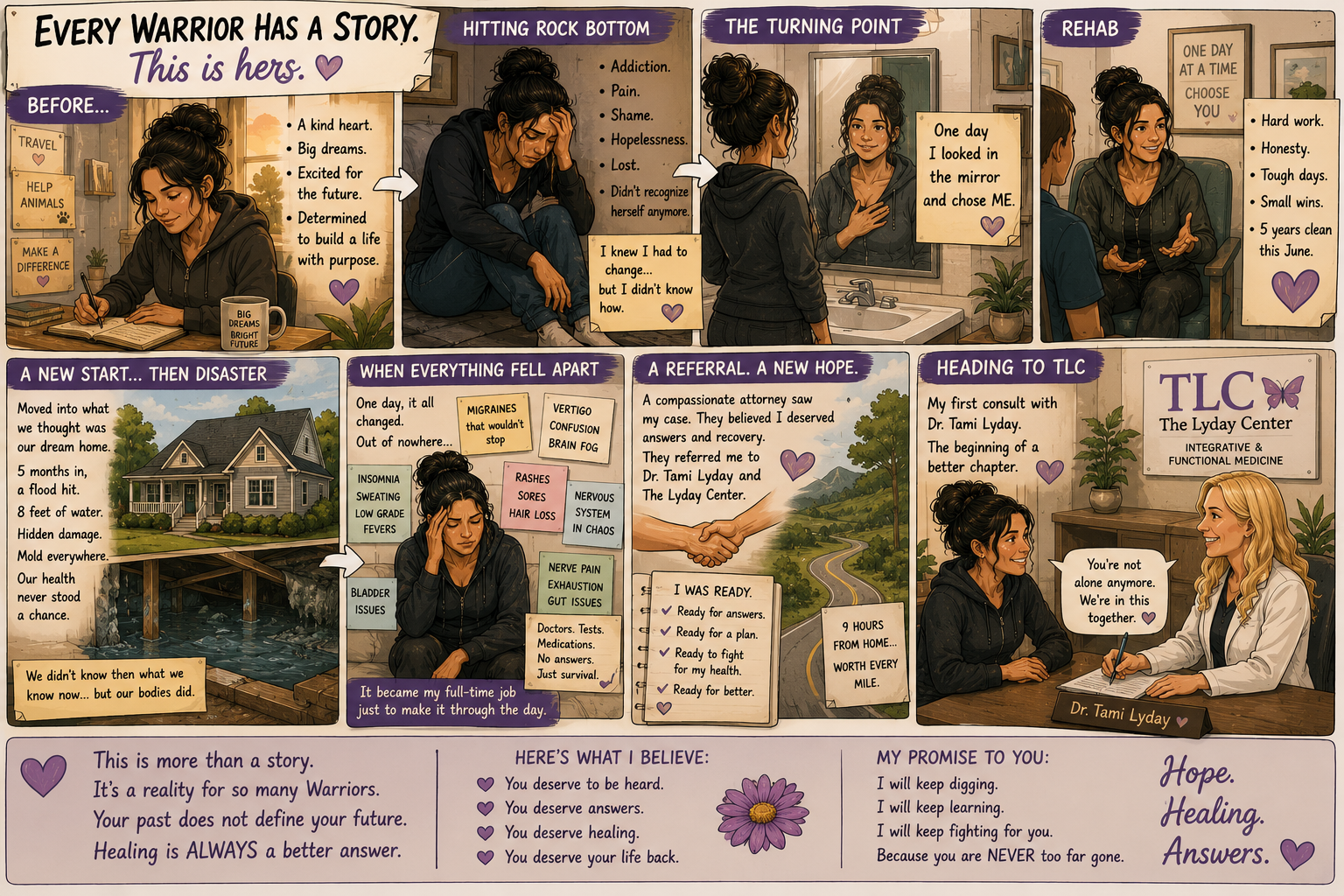
She came to me after living through a significant water-damaged-building exposure followed by an extraordinary decline in her health.
Before all of this, she was working. Driving. Living her life. Taking care of responsibilities.
Then her world became doctors, hospitalizations, chronic pain, neurologic symptoms, migraines, sleep disruption, medications, appointments—and trying to convince people that something had dramatically changed.
Eventually, she left the environment.
And, like so many people rebuilding after a major environmental problem, leaving wasn't the end of the story.
It was the beginning of trying to put a life back together.
As she sat across from me telling me everything she had endured, what struck me wasn't simply the illness.
It was her fire.
She was funny. Blunt. Fierce. Completely herself.
This woman has been through circumstances that would flatten a lot of people, and somehow her personality is still right there.
That is the part I wish people could see.
Because chronic illness can slowly turn a human being into a list of diagnoses.
Fibromyalgia.
Chronic pain.
Migraine.
Fatigue.
Insomnia.
Anxiety.
Then come the medications, procedures, referrals and specialists.
Eventually the person can disappear underneath the medical chart.
I don't want that to happen.
I want to know what changed. What has been thoroughly evaluated and what hasn't. Which symptoms may be connected and which may have completely different explanations. What can be treated. What can be rehabilitated. What medications remain necessary. What function can be regained.
And most importantly:
How much of her life can we help her get back?
That is a very different question from simply asking, “How do we manage her pain?”
There are no guarantees in medicine, and fibromyalgia does not currently have a magic cure. But that does not mean someone with fibromyalgia should be told to surrender to a lifetime defined by uncontrolled symptoms and medications.
There is an enormous difference between promising a cure and refusing to give up on improvement.
I choose the latter.
I want better sleep. Better function. Better conditioning. Better symptom control. Fewer unnecessary medications when safely possible. A nervous system that isn't constantly sounding every alarm it has.
I want her medical team looking for treatable contributors rather than assuming every new symptom is “just fibromyalgia.”
And I want her to have something she hasn't had nearly enough of:
Hope grounded in a real plan.
As many of you know, I also work with legal counsel when patients believe an environmental exposure has harmed them. My role in those cases is medical—not to decide liability, but to carefully document the history, evaluate the patient, follow the evidence, and communicate what the medical record can and cannot support.
This particular patient came to me through that world.
I understand now why someone wanted her story heard.
But somewhere during our visit, I stopped thinking only about her case.
I started thinking about the documentary I wish existed.
Not a makeover show.
Not a miracle-cure show.
A rebuilding-a-human-life show.
Follow someone from the day she walks through the door exhausted, hurting, overwhelmed and taking a frightening number of medications.
Show the testing.
Show the specialists.
Show the setbacks.
Show the days when nothing works.
Show what happens when she gets discouraged.
Show the tiny victories nobody else would understand.
And then—hopefully—show what happens when function begins coming back and her world starts getting bigger again.
Because that is the part of chronic illness most people never see.
We see the before picture.
We see the triumphant after picture.
I want people to see the middle.
The messy, frustrating, hilarious, infuriating, deeply human middle.
Yesterday I met someone whose middle is still being written.
And I have a feeling this warrior is going to give us one hell of a story.
Now I just need someone from Netflix to call me.
Who would watch this series?