
When You Look Fine…But Cannot Stand
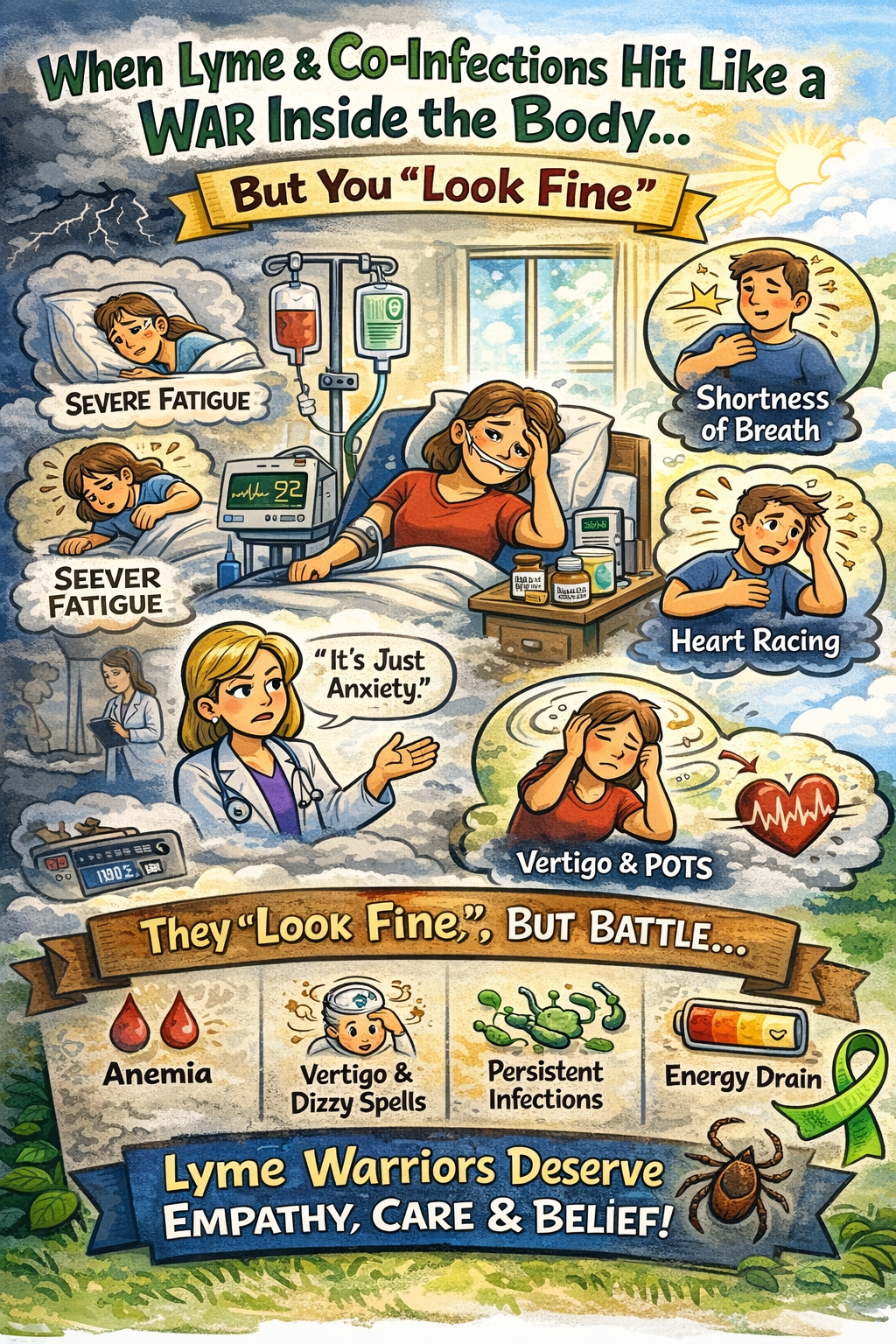
When You “Look Fine” But Can’t Stand at the Stove
The Invisible Battle of Lyme & Co-Infections
There is a particular kind of suffering that happens quietly.
It does not always show up on imaging.
It does not always trigger emergency alarms.
It often does not “look” dramatic from the outside.
But inside the body, it can feel relentless.
For many patients battling chronic Lyme and co-infections, the experience can be physically and emotionally overwhelming.
And yet — they are often fighting without the level of understanding or support given to patients with more visibly recognized illnesses.
The Intensity of Treatment
Some advanced Lyme protocols — including therapies such as dapsone combination regimens — are not gentle.
They can:
Suppress red blood cell levels
Increase methemoglobin
Cause profound fatigue
Trigger dizziness and shortness of breath
Exacerbate POTS symptoms
Create waves of inflammation as microbial load decreases
This is not a casual antibiotic course.
It can feel intense.
In many ways, it resembles other aggressive antimicrobial or cytotoxic therapies used in medicine — in that we are intentionally targeting deeply embedded pathogens while carefully monitoring blood counts and oxygen dynamics.
The difference?
Lyme patients rarely receive structured institutional support during this process.
The Invisible Illness Burden
Many of my Lyme warriors tell me:
“I look fine.”
“I don’t look sick.”
“No one understands.”
“They think I’m anxious.”
“They think I’m exaggerating.”
But here is what “fine” can look like:
Not being able to stand long enough to cook a meal
Having to sit down while brushing your teeth
Shortness of breath walking across a room
Vertigo that makes grocery stores impossible
Methemoglobin elevations that leave you air hungry
Hemoglobin drops that drain every ounce of energy
Fatigue so severe that getting out of bed feels like climbing a mountain
These patients are not weak.
They are not dramatic.
They are physiologically overwhelmed.
And because Lyme is often invisible, they are frequently dismissed.
The Emotional Toll
It is exhausting to fight an illness.
It is devastating to fight an illness while also fighting disbelief.
Many Lyme patients report:
Feeling misunderstood in ER settings
Being told their labs are “normal”
Being labeled anxious
Feeling brushed aside
When you are already struggling to breathe or stand, that kind of dismissal compounds the trauma.
The Physiologic Reality
Chronic tick-borne infections can affect:
The nervous system
The autonomic system (POTS, tachycardia, blood pressure swings)
The hematologic system
Mitochondrial energy production
Inflammatory pathways
When we use powerful antimicrobial strategies, we monitor carefully:
CBC
Methemoglobin levels
Oxygen saturation
Symptom response
Because this treatment requires medical oversight and respect for how intense it can be.
What Lyme Warriors Deserve
They deserve:
To be believed
To be monitored carefully
To be supported through aggressive therapy
To have their symptoms taken seriously
To be treated with dignity in every healthcare setting
Invisible illness is still illness.
Severe fatigue that prevents basic function is not laziness.
Air hunger is not anxiety.
Orthostatic intolerance is not dramatics.
These are physiologic phenomena.
A Message to Patients
If you are in the middle of treatment and feel:
Weak
Overwhelmed
Discouraged
Misunderstood
You are not alone.
This process can be intense.
But with careful monitoring, thoughtful pacing, and compassionate care, progress is possible.
And your struggle is real — even if others cannot see it.
A Message to the Medical Community
We can disagree on mechanisms.
We can debate literature.
But we should never dismiss suffering.
Patients battling complex chronic infections need:
Respect
Thoughtful evaluation
Safe monitoring
And empathy
Compassion costs nothing — and changes everything.
Dr. Tamara Lyday, DO
The Lyday Center